
You worked all day.
You answered every email. Sat in every meeting. Said yes to everything.
At six o’clock, you couldn’t name one thing you personally moved.
The pattern behind a packed day
This shows up in call after call. One owner threw themselves into a rebrand personally.
Picking paint colors, sitting in on every designer call, going back and forth with three web firms directly, all in the same month.
Two feet in, no hesitation. The energy was real, and so was the exhaustion.
Weeks later, the owner had spent a month of full days and couldn’t name a single result that was theirs specifically.
The hours were undeniable. What those hours had actually produced was never named, not before the month started and not after.
If you run a physical therapy, occupational therapy, speech, or mental health practice, you’ve had your own version of that month. Full from open to close, and still unsure what your own time actually bought.
Your effort and your results are two different measurements
Time and effort feel like the thing you’re being paid for. Show up early, answer fast, fill every hour, and it feels like you’ve earned something.
Your results are a different measurement entirely. They only count when something specific and measurable changed because you personally did something.
You can fill every one of your own hours for years. Full days, real exhaustion, and still nothing you can point to that only you produced.
Research on status and time use found that people now read their own packed, overworked schedule as a signal of their importance and skill, according to a study published in the Journal of Consumer Research. Busy reads as valuable to the person living it, whether or not it produced anything.
You’re planning your day backward
Here’s the part that actually causes the overwhelm. Most owners plan their own activity first and hope a result shows up somewhere inside it.
The order has to run the other way for you personally. Name the specific result you need from your day, then work backward to the smallest amount of your own activity that actually gets you there.
Decades of research on goal setting has found something simple and consistent. Specific, measurable targets change behavior in a way that vague effort never does, as decades of goal-setting research summarized by the field has shown.
Work harder or stay on top of everything leaves you guessing at what to actually do with your next hour, while one patient outcome, one signed hire, or one decision made gives you something exact to aim at.
Once you’ve named the result, most of what feels urgent on your own calendar turns out to be optional for you specifically.
What only you can do, and what everyone else can
Inside any result, one piece requires you personally. Everything else is teamwork you’ve been carrying by habit.
The rebrand didn’t need you picking paint colors and negotiating with three web designers yourself. It needed one clear call from you on direction, then a team executing against it.
Conserving your own time and attention for the one contribution only you can make is the entire reason your results scale while your raw effort plateaus.
Building a personal results habit
This asks you to point your own hours at something specific enough to measure, in the right order.
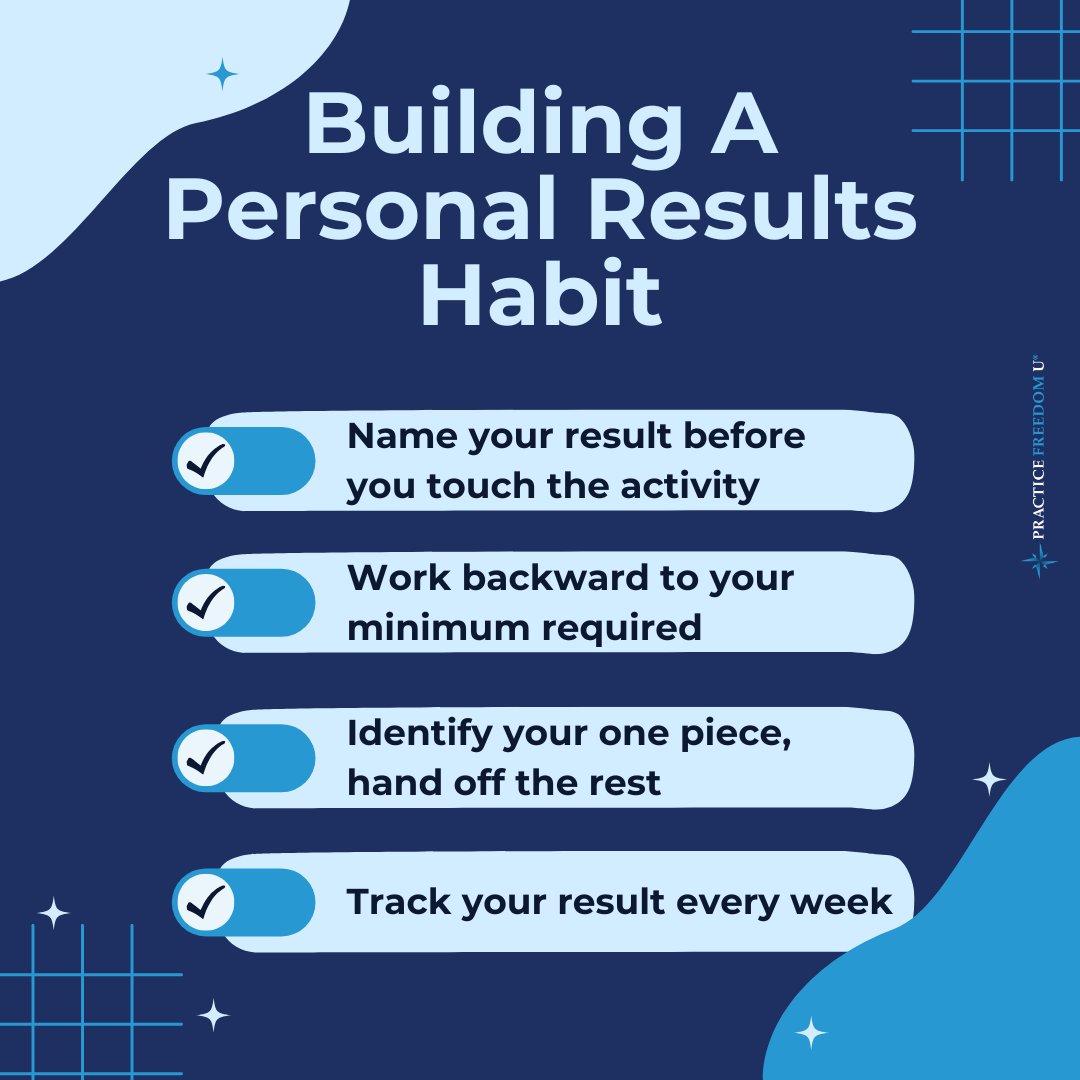
Name your result before you touch the activity
Before your next full day, whether it’s a rebrand, a hiring push, or a marketing sprint, write down the specific outcome you personally need from it.
If you can’t name it, you’re not ready to start yet.
Work backward to your minimum required
Once you’ve named the result, list only the steps that genuinely need you.
Everything else on your plate is extra weight you added because it felt productive, not because it required you.
Identify your one piece, hand off the rest
Ask what part of this actually requires your judgment, your relationships, or your signature.
Hand every other piece to your team, with the result itself as their instruction.
Track your result every week
A full calendar proves nothing about you on its own. A result you personally produced proves everything.
Executives have understood this since the balanced scorecard reshaped how companies measure themselves, tracking outcomes instead of relying on activity alone. Pick the one result that’s actually yours, and check it every week, all the way through the quarter.
Start with your result
Before you add one more thing to your day tomorrow, name the result you personally need from it.
Then work backward to the least amount of your own activity that gets you there, and hand off whatever’s left.
______________________________________________________________
Titans of Private Practice in Nashville, September 24–26
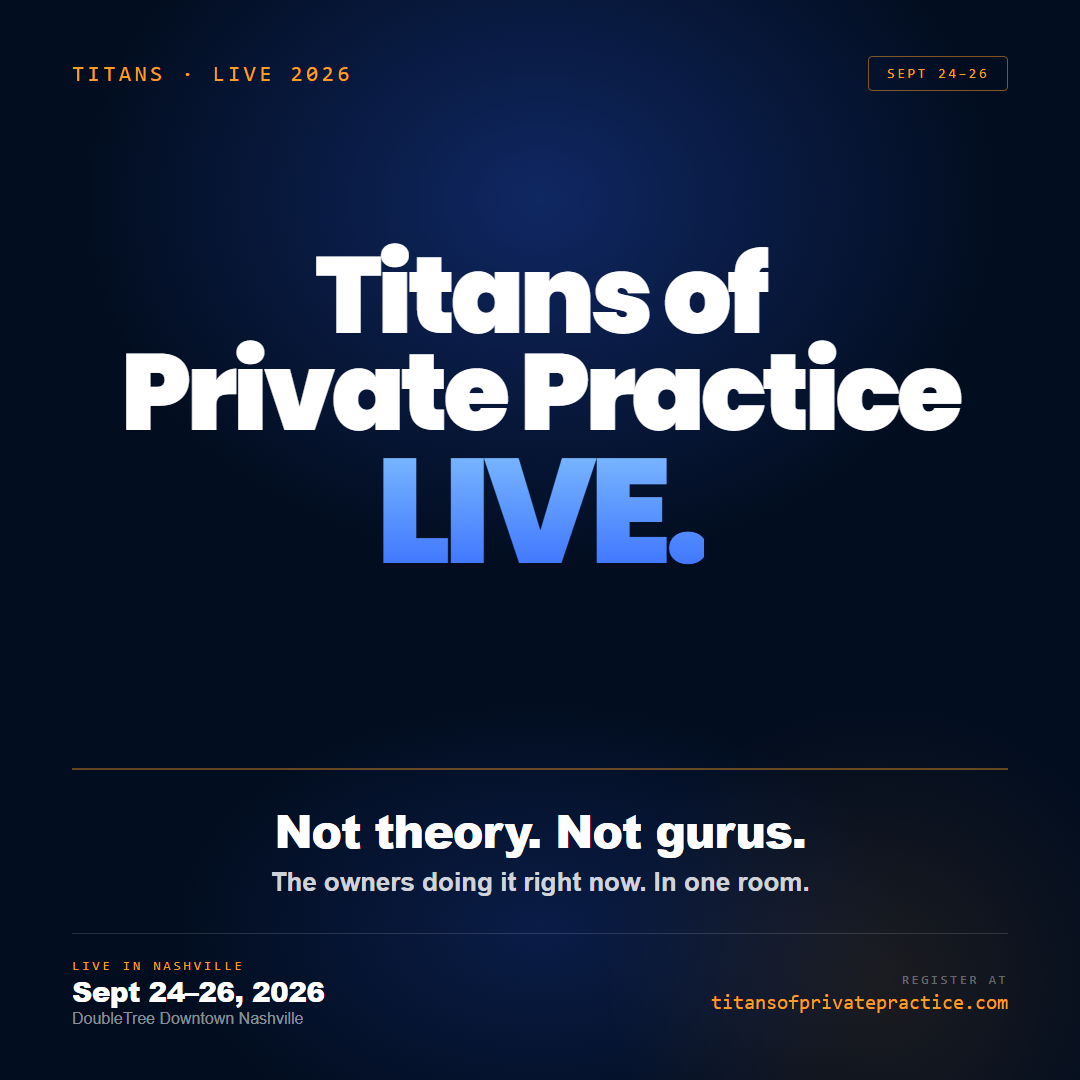
I’ll be speaking at Titans of Private Practice LIVE this September in Nashville. Three days with hundreds of practice owners, focused on building a stronger business and getting more freedom out of the one you have.
Use code freedom20 at checkout to save 20% on your registration.
Learn more and grab your spot here.
Freedom By Design, Season Two

Season two of Freedom By Design is out now on Apple Podcasts, Spotify, and YouTube. New conversations with practice owners and independent thinkers who are building businesses, and lives, on their own terms.
If something in this piece resonated, the show goes even deeper into the mindset shifts behind it.
————————————————————-
Are you ready for a coach? Join the hundreds of physical therapy owners who are building the practice of their dreams with the support, guidance and direction of a Practice Freedom U Coach. Take the first step towards creating a business that sets you free by scheduling a Discovery Call