
Two years of good advice did nothing. One conversation and one witness did.
You already know the fix.
You’ve known it for a while now. Maybe years.
Block out time for yourself. Everyone says it. You’ve said it to your own staff.
You still haven’t done it.
The pattern behind knowing and not doing
This shows up in call after call. One owner had heard “block out time for yourself” for two years and never once acted on it.
Then one week hit different. She was overwhelmed, past the point of pretending she wasn’t, and she walked straight from a coaching call to her office manager and said, I need a day.
That part alone wasn’t new. Owners hit breaking points and carve out a day off all the time.
What she did next was new. She shared her actual time blocks with her team instead of planning them silently in her own head, the way she always had before.
That one shift, saying the plan out loud to someone else, is what made it stick. She described the result as feeling far more calm, far more accomplished, and able to end her week without the usual guilt.
If you run a physical therapy, occupational therapy, speech, or mental health practice, you’ve had your own version of the advice you already know and never use.
Information was never the missing piece
Knowing the right move and making it are two different systems in your brain, and closing the gap between them is harder than it looks.
A large body of research on the intention-behavior gap has found that even a strong shift in intention produces only a small to moderate shift in actual behavior, according to a widely cited review of the research.
Most people who intend to change and don’t aren’t lacking information. They already have it.
What’s missing sits somewhere between deciding and doing, and no amount of additional advice closes that particular gap.
A witness changes what guilt can undo
Here’s the part that actually explains why the shift stuck this time and not the previous two years.
A study out of Dominican University tracked participants who wrote down goals, committed to specific actions, and reported their progress to another person every week. Those who did all three accomplished significantly more than those who only thought about their goals privately, according to the published research.
Telling someone else the plan changes what it costs to break it.
Guilt is easy to talk yourself out of when no one else knows the plan existed. It gets a lot harder to let something slide once another person is watching for it.
The push to act that same day, and to make the plan visible to her team, is what turned two years of knowing into one week of doing.
Building the habit of a witness
This takes building the structure that makes follow-through the default instead of the exception.
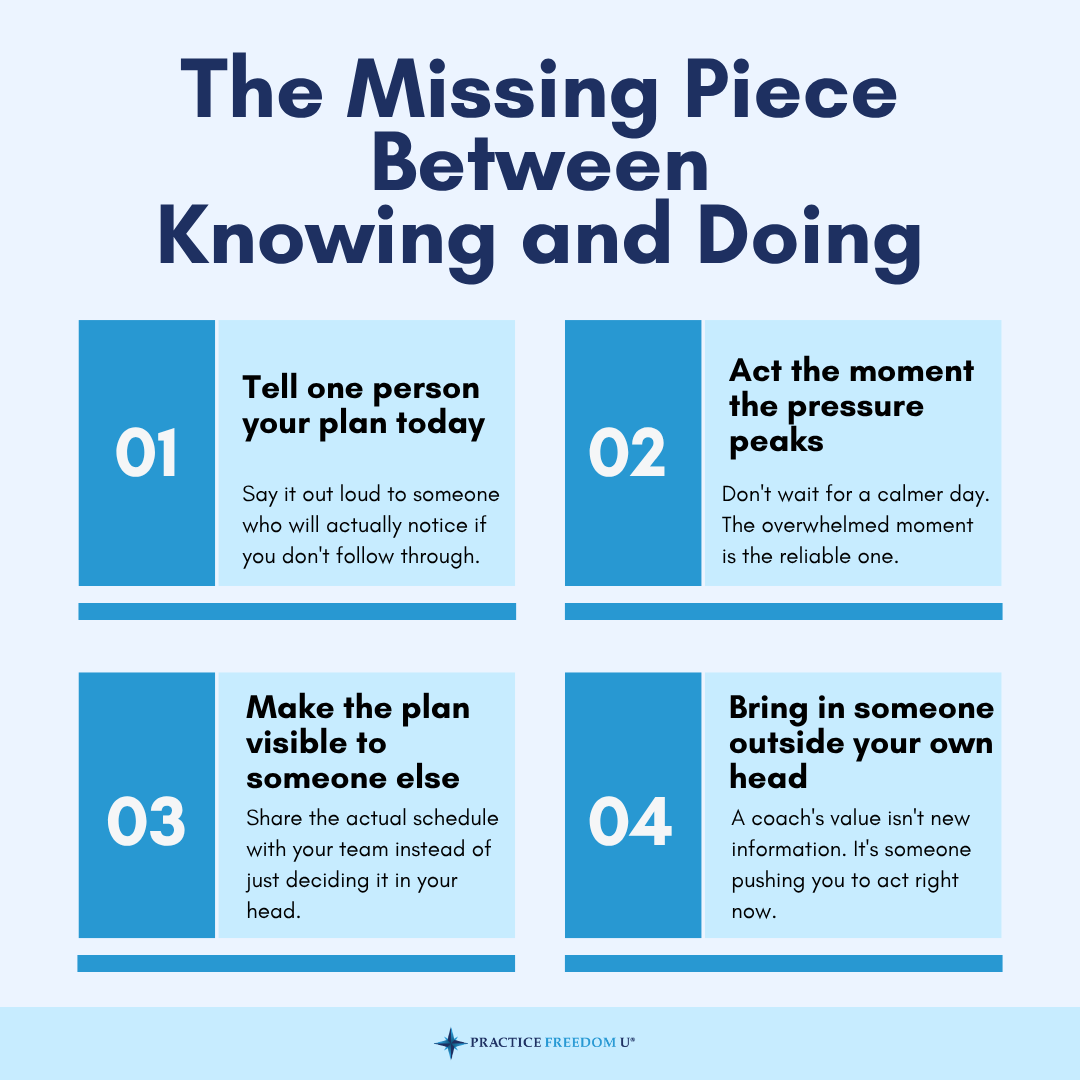
Say the plan out loud to someone who will notice
Pick one thing you already know you should be doing. Tell one specific person, today, not eventually.
Vague accountability to no one in particular doesn’t count. It has to be a real person who will actually notice if you don’t follow through.
Act on the same day the pressure peaks
Waiting for the right moment to start usually means waiting until the feeling passes and the urgency fades with it.
The moment you feel the most overwhelmed is often the most reliable moment to actually make the change, not the calmest one.
Make the plan visible to someone else
A boundary that lives only in your own head erodes fast. A boundary your team can see is much harder to abandon without someone noticing.
Share the actual schedule, the actual blocked time, the actual day off, out loud and in writing.
Get outside your own head on purpose
Coaching works because someone outside your business pushes you to act in the moment you’re actually in, rather than leaving the plan for later.
Coaching engagements report strong measurable returns for both the individual and the organization, according to the International Coaching Federation’s ongoing global research. What actually pays off is someone else in the room when the moment to act arrives.
Start with the fix you already know
Pick the piece of advice you’ve been carrying around for the longest without using it.
Tell one person today, and show them the plan instead of only describing it.
That’s the whole difference between knowing and doing, and it’s smaller than it feels from here.
Season 2 of Freedom by Design
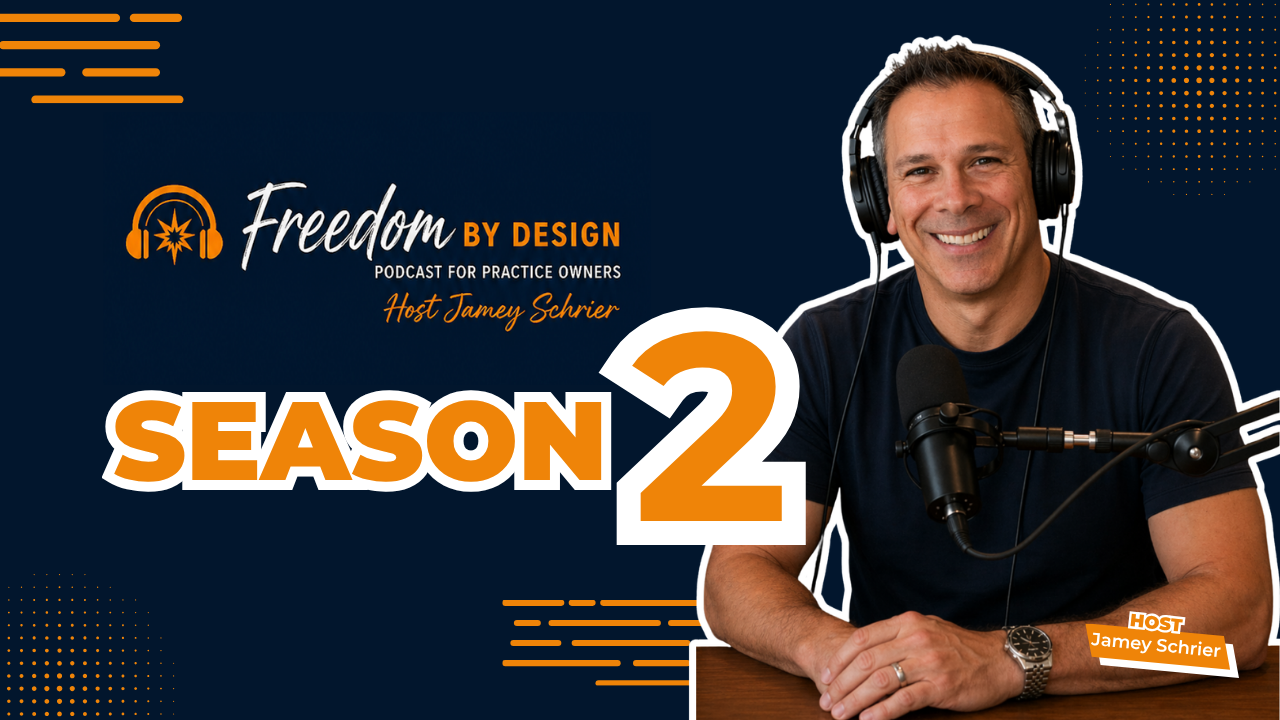
Season two of Freedom By Design is out now on Apple Podcasts, Spotify, and YouTube. New conversations with practice owners and independent thinkers who are building businesses, and lives, on their own terms.
If something in this piece resonated, the show goes even deeper into the mindset shifts behind it.
————————————————————-
Are you ready for a coach? Join the hundreds of physical therapy owners who are building the practice of their dreams with the support, guidance and direction of a Practice Freedom U Coach. Take the first step towards creating a business that sets you free by scheduling a Discovery Call