
Your team’s trust in a new tool starts before it’s even turned on.
You bought the AI tool.
Three months later, almost nobody on your team is using it.
Nobody asked them before it showed up on their screen.
The pattern behind the tool nobody used
This shows up in call after call. One practice brought in an AI scribe to cut documentation time and ease burnout.
The tool did what it promised. Notes got faster. Burnout eased for the clinicians who used it.
Adoption still crawled. Most of the team kept typing notes by hand, months after the tool went live.
Nobody had explained why it mattered or asked what would make it easier to trust.
If you run a physical therapy, occupational therapy, speech, or mental health practice, you’ve felt some version of this. A tool gets purchased at the top and handed down, and the team decides not to use it without saying so.
Trust breaks in the rollout
Most technology failures aren’t really technology failures.
A landmark study of over 100 companies attempting major change found that efforts fail again and again for the same human reasons, not for lack of a good idea, according to the original research published in Harvard Business Review. Urgency never got built, the reason for the change never got explained, and the people most affected were never brought into the decision.
An AI rollout in a small practice is exactly this kind of change, just smaller in scale.
Doctors overwhelmingly want to be part of the decision before a new AI tool enters their workflow, physician surveys have consistently found. Your team wants the same thing, whether or not anyone asked them.
One error and the tool loses the room
There’s a second reason adoption stalls even after the rollout gets explained.
People forgive a human colleague for a mistake far more easily than they forgive a piece of software for the same mistake, research on algorithm aversion has found. One wrong note, one odd transcription, and the tool gets written off long after the humans on the team have made worse errors themselves.
That reaction isn’t rational, and it doesn’t need to be. It’s just what trust does under a double standard.
Knowing this in advance changes how you introduce the tool and how you respond the first time it gets something wrong.
Rolling out AI without losing the room
This calls for the same rollout speed with a different order of operations.
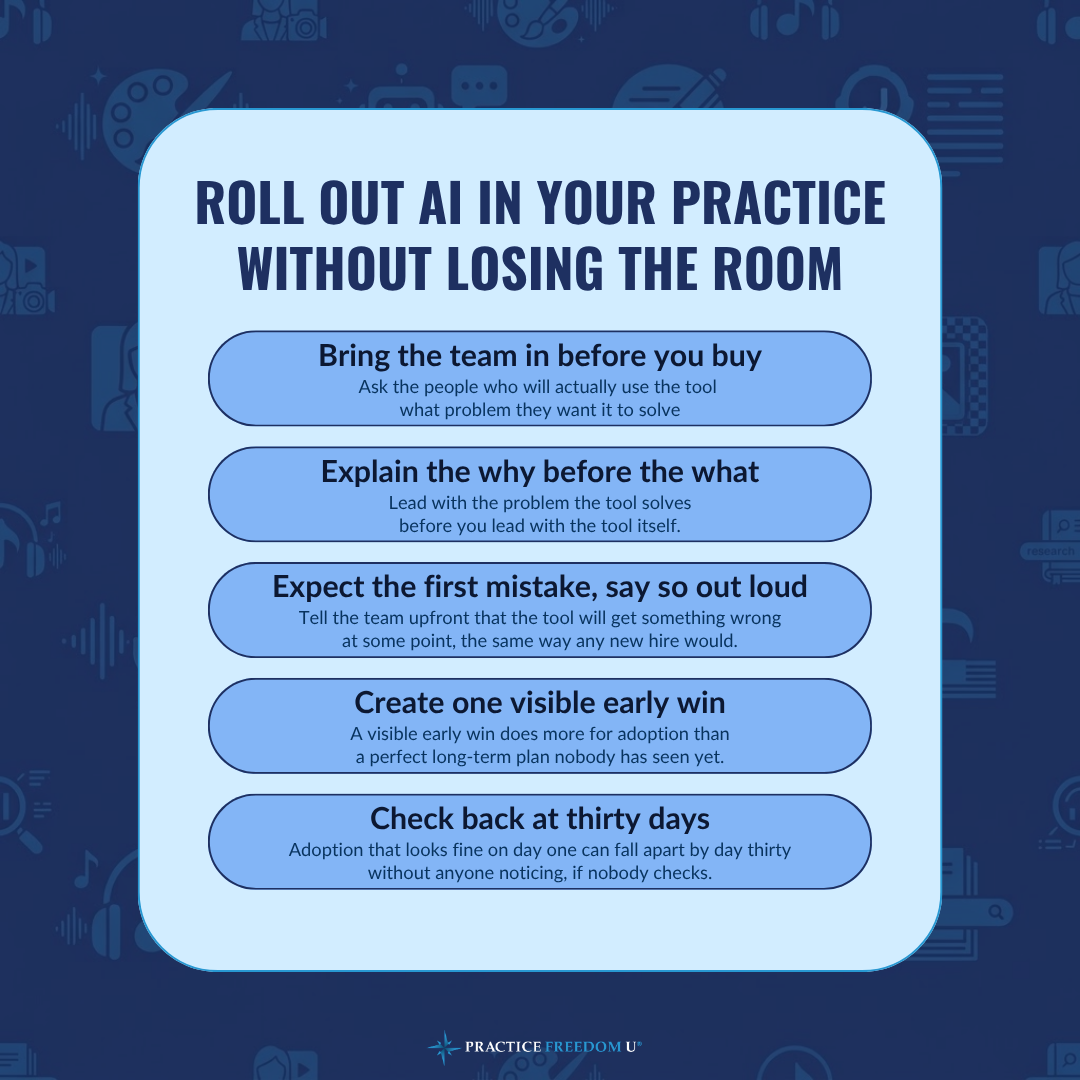
Bring the team in before you buy
Ask the people who will actually use the tool what problem they want it to solve, before you sign anything.
A decision made with them lands differently than a decision announced to them.
Explain the why before the what
Lead with the problem the tool solves before you lead with the tool itself.
Burnout, hours lost to notes, a specific bottleneck they’ve already complained about. Name that first.
Expect the first mistake and say so out loud
Tell the team upfront that the tool will get something wrong at some point, the same way any new hire would.
Naming that ahead of time keeps one bad note from becoming the reason everyone stops using the tool without telling you.
Create one visible early win
Pick the single clearest benefit the tool can deliver in the first two weeks, and make sure the team sees it happen.
A visible early win does more for adoption than a perfect long-term plan nobody has seen yet.
Check back at thirty days
Ask the team how it’s actually going a month in, not just whether anyone had complaints in week one.
Adoption that looks fine on day one can fall apart by day thirty without anyone noticing, if nobody checks.
Start with the conversation
Before the next tool gets bought, have the conversation you’d normally have after.
Ask your team what’s actually slowing them down, and let that shape what you bring in next.
Freedom By Design, Season Two
Season two of Freedom By Design is out now on Apple Podcasts, Spotify, and YouTube. New conversations with practice owners and independent thinkers who are building businesses, and lives, on their own terms.
If something in this piece resonated, the show goes even deeper into the mindset shifts behind it.
Titans of Private Practice LIVE
Join me in Nashville, September 24 to 26, for three days built around one focus: building a business that actually gives you your life back.
Use code freedom20 for 20% off registration.
————————————————————-
Are you ready for a coach? Join the hundreds of physical therapy owners who are building the practice of their dreams with the support, guidance and direction of a Practice Freedom U Coach. Take the first step towards creating a business that sets you free by scheduling a Discovery Call