

A patient does not decide only in the eval, the phone call, or the consult.
They start deciding the moment they hear your name, visit your website, watch a video, read your bio, or get a referral from someone they trust. By the time they speak with you, they are already forming a belief about whether you understand their problem and whether they feel confident taking the next step.
That is why the hesitation you see in the room often started before they got there.
Why Being Right Isn’t Enough
Most practice owners are trained to assess, explain, and solve. That skill matters, but it does not always create commitment.
A patient can understand your plan and still hesitate. They can agree with your explanation and still avoid moving forward. They can respect your expertise and still feel unsure.
That usually happens when the conversation moves too quickly to the answer.
The patient needs to feel that you understand what the problem is costing them, their time, their energy, their work, their family life, their confidence, their independence. When that connection is missing, the plan can sound correct and still feel optional.
Where Hesitation Actually Comes From
Most patients do not say no directly.
They pause, delay, say they need to think about it, or agree in the moment and never follow through. That hesitation is not random. It is usually a signal that something in the process did not fully land.
It can happen in the conversation, it can happen before they ever meet you, and it can happen because the connection between their problem and your plan was never made clear enough. When that connection is weak, even a strong recommendation feels optional.
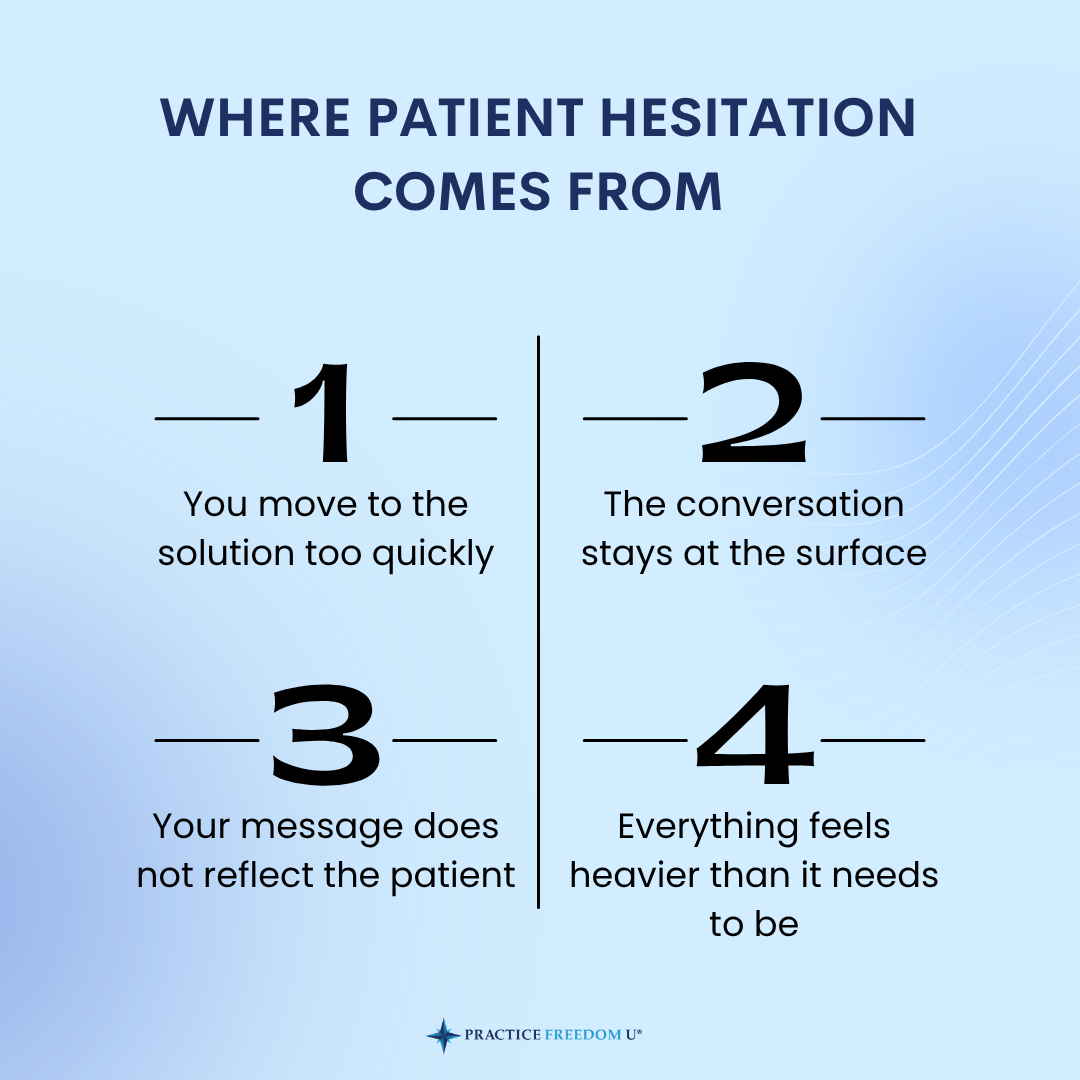
You move to the solution too quickly
You identify the issue and present the plan right away. That skips the part where the patient fully processes what the problem is doing to them. Without that clarity, the urgency never builds.
The conversation stays at the surface
You talk about symptoms, diagnosis, and treatment, but not what the problem is affecting in their life. People decide based on what matters to them, not just what is clinically correct.
Your message does not reflect the patient
Your website, content, and materials explain what you do, but they do not clearly show who it is for. If someone cannot immediately see themselves in your message, they hesitate or leave.
Everything feels heavier than it needs to be
Long explanations, dense pages, and too much detail make decisions harder. When people feel overwhelmed, they delay instead of moving forward.
The Standard Comes From You
This cannot be pushed entirely onto marketing, the front desk, or the clinicians.
The owner sets the standard for how the practice builds trust. That includes the way the team talks about care, the way the website explains services, the way referral relationships are developed, and the way patients are guided through decisions.
If your message is unclear, people hesitate. If your conversations stay too clinical, people hesitate. If your team does not know how to connect the plan to what the patient actually wants, people hesitate.
What Needs to Change
Patients do not need more explanation.
They need to feel understood, see the value of the plan, and know what happens next.
That requires better questions, clearer messaging, stronger follow-through, and a consistent way of building trust from the first touchpoint to the final decision.
When that happens, the plan stops feeling optional.
Coming Soon
This is part of what I’ve been exploring in my upcoming limited series podcast, Freedom by Design.
Two upcoming episodes go deeper into this, one with Joe Marcoux on confident sales conversations and the skill of connection, and one with Brent Stutzman on marketing, trust, and building a brand people remember.
More details soon.
————————————————————-
Are you ready for a coach? Join the hundreds of physical therapy owners who are building the practice of their dreams with the support, guidance and direction of a Practice Freedom U Coach. Take the first step towards creating a business that sets you free by scheduling a Discovery Call