
You know the feeling. You’re driving up to your own practice and you want to keep driving past it.
Nothing happened that morning. No crisis, no fire.
Just the low hum of dread that shows up before you’ve even parked the car.
That feeling is your nervous system running the business. What looks like strategy is often emotional decision making wearing a business suit.
The pattern that shows up in almost every coaching call
A practice owner I’ve talked with recently built something most people would call a success. Multiple locations, a team of clinicians, revenue that looked great on paper.
And still, every time a staff member asked for time off, it landed like a personal attack.
The request was reasonable. The owner had quietly made themselves the only person allowed to be tired.
Every hire, schedule change, hard conversation got filtered through whatever the owner felt that day.
The team was being managed by mood.
If you run a physical therapy, occupational therapy, speech, or mental health practice, you’ve felt some version of this. You built the thing to create freedom.
Somewhere along the way, it started running you.
Every emotional problem still ends up on your desk
No SOP touches the tightness in your jaw when your front desk pushes back on a policy.
No hiring checklist touches the pit in your stomach before a performance conversation you’ve been avoiding for three weeks.
Those feelings get suppressed, rationalized, or apologized away. Every one of those responses is your nervous system calming itself down, not a real solution.
Your team feels it too. A leader’s mood spreads through a team, as Wharton’s executive education program has found, even across video calls and email.
Negative moods spread just as strongly as positive ones.
That makes this a leadership issue. You’re setting the emotional weather for everyone who works for you, whether you mean to or not.
Interrupting emotional decision making in the moment
None of this gets fixed by trying harder or caring more. It gets fixed by building a few specific habits into how you decide and how you talk to your team when things get tense.
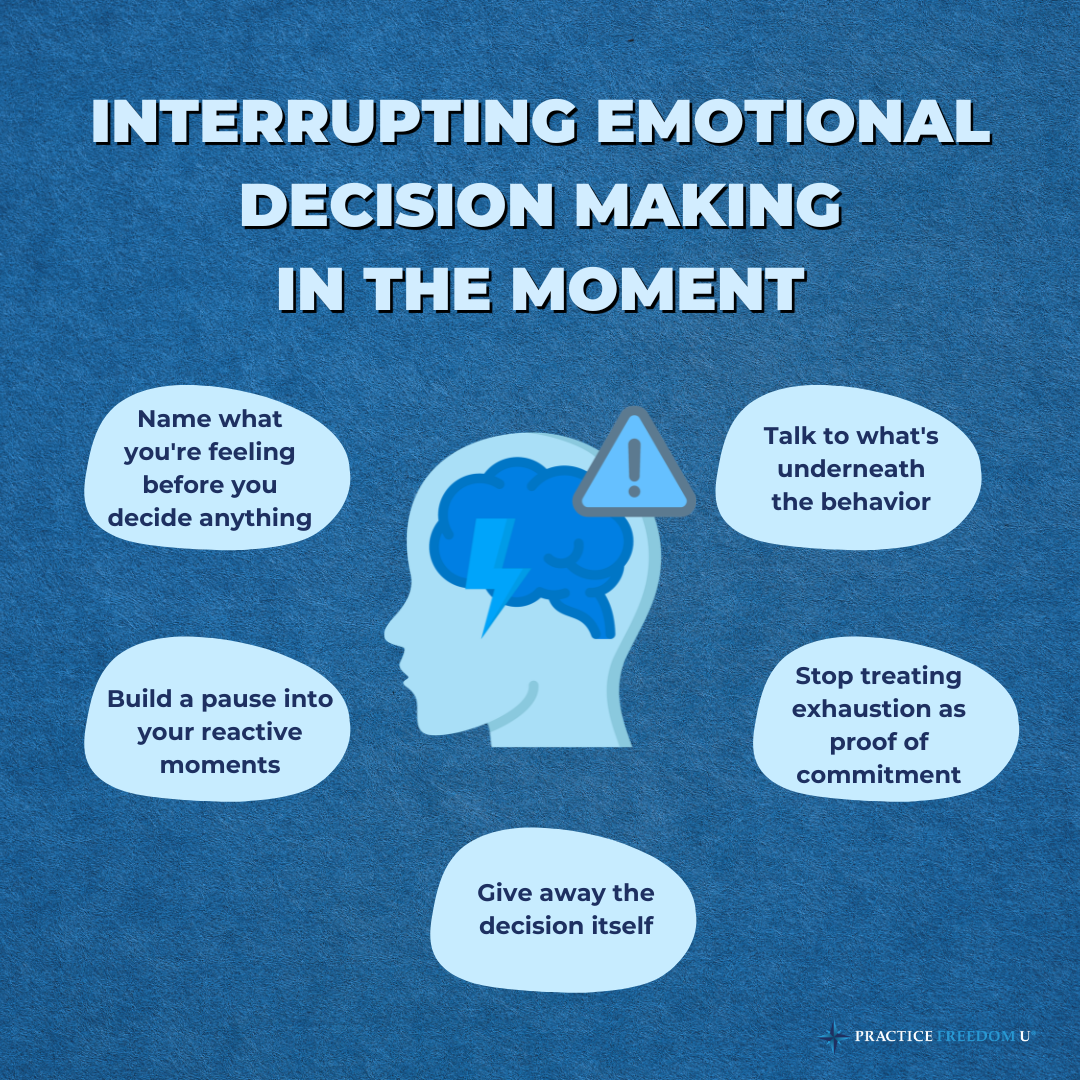
Name what you’re feeling before you decide anything
“I am angry” traps you inside the emotion. “I feel angry” gives you room to think.
Before you send the email or make the call, name the feeling out loud: anxious, embarrassed, resentful, whatever it is. A UCLA neuroimaging study found that simply labeling an emotion calms the amygdala and activates the part of the brain responsible for regulation.
Naming the feeling is the intervention.
Talk to what’s underneath the behavior
“Your numbers are down, here’s what needs to change” triggers defensiveness before it lands as feedback.
Try naming what you’re noticing instead. You seem frustrated lately. Something feels off. Tell me what’s going on.
That opening gets you the truth faster than the numbers ever will.
Build a pause into your reactive moments
The furious email doesn’t need a reply in ten minutes. The staff conflict doesn’t need a decision before lunch.
Give yourself one hour between the trigger and the response. Most regretted decisions happen in that gap.
Stop treating exhaustion as proof of commitment
Being the only one who can’t take a day off means you’ve built a structural problem and started defending it as commitment.
Ask honestly whether the business needs you there, or whether you need to be needed.
Give away the decision itself
Delegating the task while keeping every decision is just busywork with extra steps.
A Gallup study of 143 Inc. 500 CEOs found that strong delegators generated 33 percent more revenue than weak ones, eight million dollars versus six million on average.
Letting go of the decision is a growth strategy.
Start with one thing
Put a small gap between what you feel and what you do. That gap is where every good decision in your business actually lives.
The next time you feel that tightness before a hard conversation, name it before you open your mouth.
Simple, not easy, and it works anyway.
Freedom By Design, Season Two
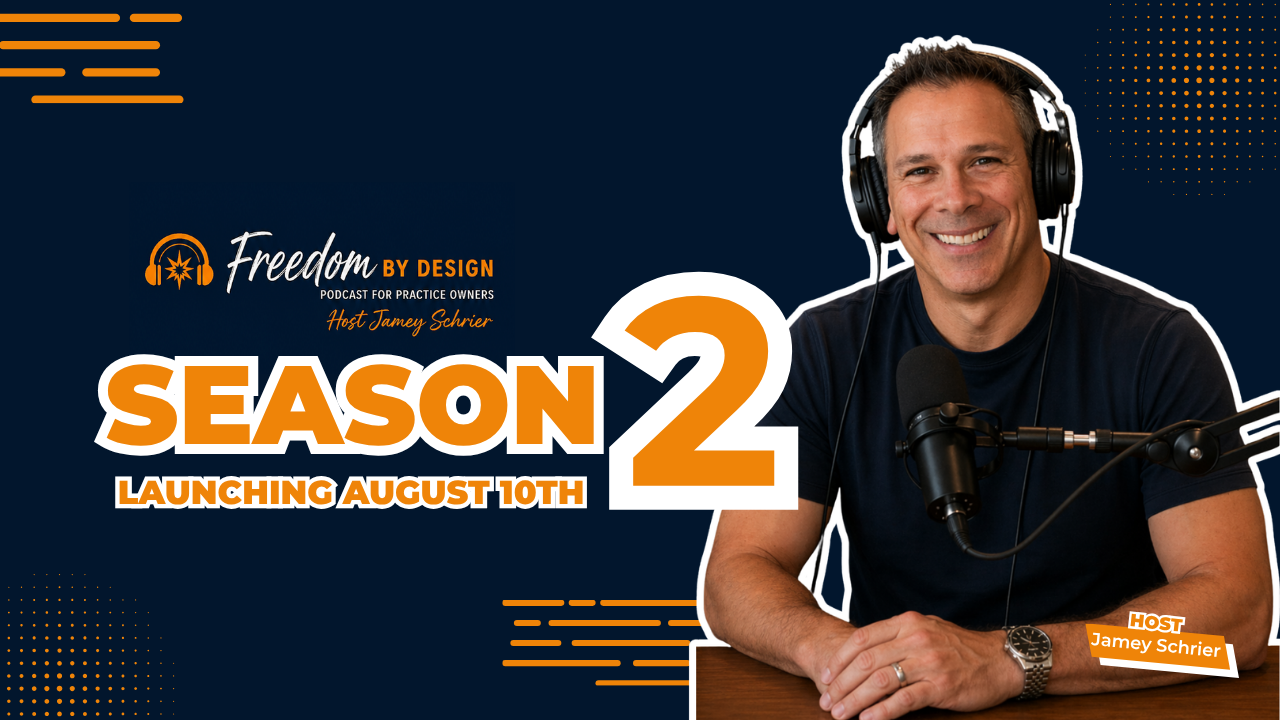
This is exactly what came up in three recent conversations on Freedom By Design with Dr. Brian Paris, Doug Noll, and Tom DiAngelis.
Season two launches August 10 on Apple Podcasts, Spotify, and YouTube. These three conversations go a lot deeper into what’s underneath the decisions you make every day.
————————————————————-
Are you ready for a coach? Join the hundreds of physical therapy owners who are building the practice of their dreams with the support, guidance and direction of a Practice Freedom U Coach. Take the first step towards creating a business that sets you free by scheduling a Discovery Call