

Referral problems are often blamed on marketing, competition, or changes outside the business. But many referral breakdowns happen quietly inside the practice first.
A referred patient waits too long for a callback. Scheduling feels disorganized. Communication is inconsistent. A physician sends a patient and never hears anything back.
None of these issues feel dramatic on their own. Over time, they slowly damage referral trust.
That is why referral growth is not just about generating more referrals. It is also about identifying where the current process is creating friction.
The good news is you usually do not need weeks of analysis to spot the biggest problems. In about 30 minutes, you can often identify the referral breakdowns slowing growth inside the business.
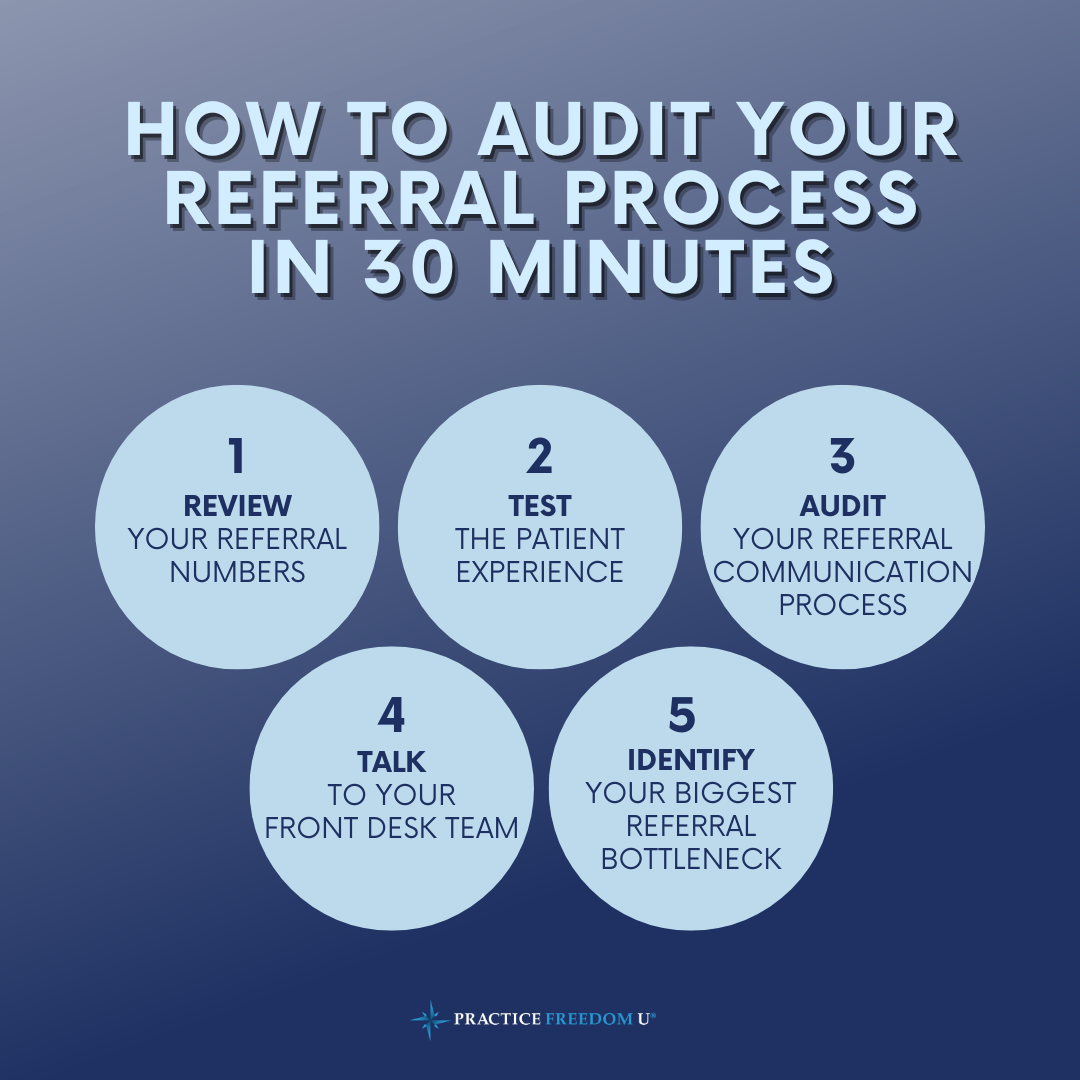
Step 1: Review Your Referral Numbers
Start with the numbers first. Use the actual data, not assumptions or gut feelings.
Look at the last 60–90 days and answer these questions:
Questions to Review
- How many referrals came in?
- Where did they come from?
- Which sources increased?
- Which sources declined?
- How many referred patients actually scheduled?
- How many cancelled before evaluation?
- How many never responded?
- How long did it take to contact new referrals?
- Which referral sources send the highest-quality patients?
- Are referrals concentrated among only a few providers?
Many owners realize quickly that they are not actually tracking several of these metrics consistently. That alone is a problem. (ARHQ)
If you cannot clearly see referral flow, you cannot manage it.
What Good Looks Like
Healthy practices usually have:
- consistent referral tracking
- clear visibility by referral source
- fast patient contact times
- low scheduling friction
- stable conversion rates
- diversified referral relationships
Practices that struggle often rely on memory, assumptions, or incomplete reporting.
Step 2: Test the Patient Experience
This is one of the fastest ways to identify referral leakage.
Call your own practice like a new patient but do not announce yourself.
Pay attention to:
- how quickly the phone is answered
- how the staff sounds
- whether the process feels confident or confusing
- how long scheduling takes
- whether insurance questions are handled clearly
- whether the experience feels organized
You might be shocked when you hear your own intake process for the first time.
The issue is not usually individual staff performance. Inconsistency across the process is what creates the breakdown.
Referral sources want confidence that their patients will be taken care of professionally and efficiently every time.
Red Flags to Watch For
- Long hold times
- Calls going to voicemail regularly
- Confusing explanations
- Unclear scheduling timelines
- Staff sounding rushed or frustrated
- Different answers from different team members
- Delayed callbacks
- No follow-up process for missed calls
One poor experience may not destroy a referral relationship immediately but repeated inconsistency eventually will. (APTA)
Step 3: Audit Your Referral Communication Process
This is where many practices quietly lose trust. Referral sources need visibility and reliability more than another marketing touch. Take a look at your current communication rhythm.
Questions to Ask
- Do referral sources receive progress updates?
- Does someone confirm when patients are scheduled?
- Are discharge summaries sent consistently?
- Is communication standardized or dependent on individual therapists?
- Does anyone own referral follow-up internally?
- Are referring providers acknowledged regularly?
- Is there a process for reconnecting with inactive referral sources?
Many practices believe they communicate well because communication happens sometimes.
That is different from having a reliable process.
When Referral Relationships Depend on Individuals
Referral relationships often live inside individual employees instead of inside the business itself which creates risk.
Without clear systems in place, therapist turnover, inconsistent outreach, and owner bandwidth can all affect referral consistency.
This is one reason owner-dependent practices struggle to create predictable growth.
Step 4: Talk to Your Front Desk Team
Your front desk team usually sees problems long before leadership does.
Ask questions like:
- Where do patients get frustrated?
- What delays happen most often?
- Which referral sources call repeatedly?
- What causes scheduling bottlenecks?
- What information is usually missing?
- Where do communication breakdowns happen?
- Which therapists create the smoothest patient experience?
The goal is to find the repeated issues, because repeated issues show you where the process is breaking down.
Step 5: Identify Your Biggest Referral Bottleneck
Do not try to fix everything at once. Instead, choose the single issue creating the most friction.
Usually it is one of these:
- slow intake response times
- scheduling delays
- inconsistent therapist communication
- lack of referral tracking
- poor physician follow-up
- unclear ownership internally
- inconsistent patient experience
One operational improvement can sometimes recover significant referral volume without increasing marketing at all. (IHI)
The Goal Is Not More Activity
You as the owner might respond to referral declines by increasing networking, lunches, visits, or marketing campaigns.
Sometimes the business just needs to have fewer leaks and not more activity.
A practice with operational consistency, strong communication, and clear accountability becomes easier to trust.
And trust is what drives referrals long term.
A Simple Monthly Referral Audit Rhythm
Start reviewing referral systems consistently instead of reacting only when numbers drop.
A simple monthly review should include:
- referral volume by source
- conversion rates
- patient response times
- cancellation trends
- inactive referral sources
- intake bottlenecks
- communication consistency
- patient feedback patterns
This creates visibility before small issues become bigger growth problems.
Want to Go Deeper?

This is one of the reasons I created the Freedom By Design podcast.
As practices grow, referral problems often stop being marketing problems. They become operational problems, communication problems, leadership problems, and systems problems.
If you want to go deeper into building a practice that creates consistent growth without depending on constant owner involvement, you can listen to or watch the Freedom By Design podcast on YouTube, Spotify, and Apple Podcasts.
————————————————————-
Are you ready for a coach? Join the hundreds of physical therapy owners who are building the practice of their dreams with the support, guidance and direction of a Practice Freedom U Coach. Take the first step towards creating a business that sets you free by scheduling a Discovery Call