


If you’ve ever wondered who ensures that patient care stays consistent, clinicians stay supported, and operations stay compliant, the answer lies in strong clinical leadership.
This role bridges care and business. It keeps the clinical side of a healthcare practice running at a high standard while aligning with laws, ethics, and performance goals. Think of it as both the coach and the compass of a clinical team. Someone who leads with experience, mentors with empathy, and manages with strategy.
Most people in this position come from a clinical background. They’ve walked the floor, treated patients, and handled the daily grind. Eventually, they step into leadership because they want to make a broader impact. Helping not just patients, but the people who care for them. It’s a natural evolution from clinician to leader.
The Core Responsibilities of the Role
While specifics differ by setting, the focus is consistent: quality, leadership, and growth. Let’s look at the major areas this job oversees.
1. Clinical Oversight and Quality Assurance
The job is simple but critical, keep patient care excellent and compliant. They set the standards, monitor results, and hold the team accountable. They review charts, update policies, and keep the clinic aligned with current healthcare regulations. It’s not flashy work, but it’s what keeps patients safe, clinicians consistent, and the business protected.
2. Leadership, Team Management, and Mentorship
Here, the work is about creating consistency, accountability, and trust. They set clear expectations, track performance, and make sure the team delivers. They review charts, update procedures, and stay ahead of changing standards. It’s steady, behind-the-scenes work that supports clinicians, strengthens culture, and keeps patient care operations running smoothly.
3. Operational and Administrative Management
Strong clinical leadership doesn’t just oversee care. It keeps the entire healthcare operation efficient. They track productivity, manage budgets, and make sure systems support the team, not slow them down. In smaller practices, that might mean handling billing, documentation, or scheduling. In larger ones, it’s about aligning the clinical side with operations so everything runs as one. When clinical and administrative teams move together, care improves, the team stays focused, and the business performs better.
4. Strategic Planning and Program Development
This position helps shape what’s next for the practice. They see where patient needs meet opportunity and turn those insights into action. Whether it’s launching telehealth or adding a new specialty, they make sure growth is strategic, sustainable, and keeps care quality front and center. Their leadership turns ideas into real results without sacrificing outcomes or standards.
Why This Role Matters
This isn’t just another job title. It’s a vital function that drives both clinical excellence and business growth.
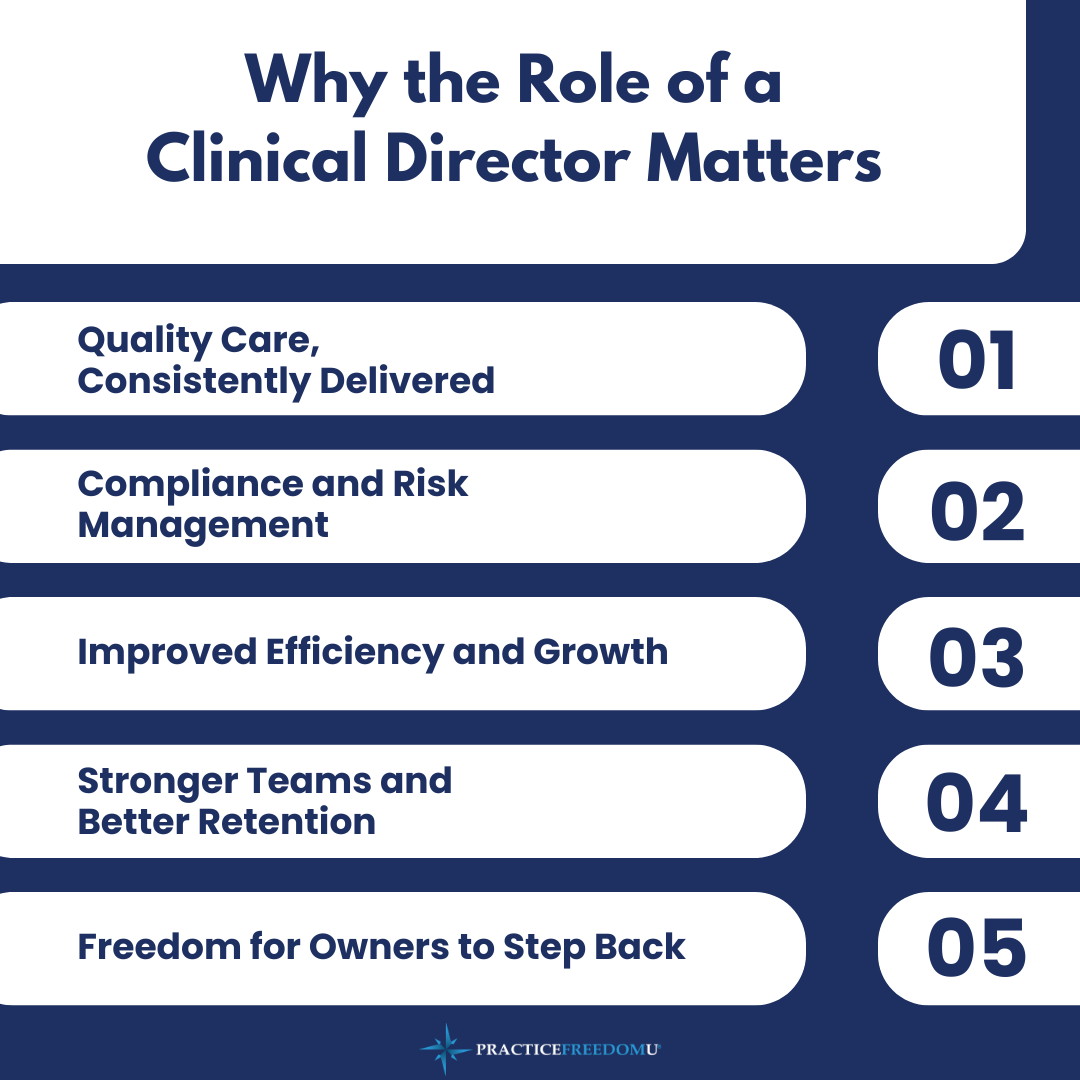
Quality Care, Consistently Delivered
When one person is responsible for overseeing standards of care, quality becomes measurable and repeatable. That consistency builds trust with patients and strengthens the practice’s reputation.
Compliance and Risk Management
Regulatory mistakes can cost a business dearly. This role protects the practice by ensuring documentation, treatment, and policies are aligned with healthcare laws and ethical standards.
Improved Efficiency and Growth
Because they monitor operations, these leaders often find opportunities to streamline workflows and increase productivity without burning out the team. Their insights can open the door to new programs, service lines, or referral sources that expand reach and revenue.
Stronger Teams and Better Retention
Clinicians want leadership that supports them. The person in this role provides mentorship, resolves conflicts, and advocates for the team’s needs like improving morale, reducing turnover, and building a culture of accountability and excellence.
Freedom for Owners to Step Back
In private practices, many owners start out as the lead clinician. But as the business grows, continuing to treat full-time creates a ceiling. Delegating clinical leadership allows the owner to focus on strategy, business development, or simply reclaiming time for life outside the clinic.
As one principle I often teach practice owners goes, “Your staff can’t rise above you if you’re still in the trenches.” Empowering someone to take ownership of patient care operations is what allows your team, and your business, to truly scale.
The Bigger Picture
Strong leadership in this role transforms more than operations. It creates an environment where clinicians can do their best work, patients receive consistent, high-quality care, and the business runs with stability and integrity.
In my experience coaching practice owners, the turning point often comes when they install real leadership between themselves and the day-to-day. It’s when they stop being the hub of every decision and start building a team that can carry the vision forward. This position is the keystone of that structure.
If you’re still managing every clinical decision yourself, it might be time to ask: who’s steering the clinical ship when you’re not there? Building a team that includes strong healthcare leadership isn’t just good for business, it’s the foundation for freedom, growth, and long-term success.
————————————————————-
If you’d like to join the discussion, come be part of the Practice Freedom Community.
it’s where practice owners talk openly about growth, clarity, and what real freedom in business looks like. No hype, no theory. Just honest conversations and tools that work.
Because freedom doesn’t come from chasing more.
It comes from knowing where you’re going and why.
————————————————————-
Are you ready for a coach? Join the hundreds of physical therapy owners who are building the practice of their dreams with the support, guidance and direction of a Practice Freedom U Coach. Take the first step towards creating a business that sets you free by scheduling a Discovery Call